LTS: Đây là bài sưu tầm những nghị luận quanh vụ rò rỉ của Thành quốc Vatican. Hai tác giả nhà báo người Ý và hai tác phẩm nổi danh của họ: "Con Buôn Trong Đền Thờ" (Merchants in The Temple) của Gianluigi Nuzzi, và "Lòng Tham" (Avarice) của Emiliano Fittipaldi.
- I - Sự Rò Rỉ Của Vatican Đánh Dấu Ngày Tàn Của Những Bí Mật Về Giáo Hoàng - John L. Allen Jr. ngày 4 tháng 11, 2015
Cái đỏ mặt đầu tiên,
- II - Giáo Hoàng Phanxicô bỏ bớt công việc (cải cách) của ông, nhờ hai cuốn sách mới điều tra chi tiết những hệ thống tham nhũng trong Vatican.
- III - Những nhận xét từ Nhà Xuất Bản Amazon:
Khá khen cho Các Con Buôn Đền Thờ, ông Nuzzi có nguồn tài liệu đáng kể trong Giáo triều Rôma, cho phép truy cập "tài liệu duy nhất chưa bao giờ xuất bản trước đây" tiết lộ một câu chuyện đáng xấu hổ thực sự gây sốc về sự xa xỉ và tham nhũng trong mạng lưới tài chính rộng lớn của Vatican . . . Như Nuzzi đã dũng cảm và thẳng thắn phác họa, mạng lưới thoái thác hoang mang, và Giáo Hoàng Frances khó thể vượt qua các rào cản trong việc minh bạch. Mặc dù nhiều bối cảnh lịch sử hơn sẽ rất hữu ích, nhưng đây là một công việc nghiên cứu điều tra đầy khiêu khích. "- Kirkus
___________________
Bài đọc thêm:
- Hai Người Bị Bắt Trong Vụ Bê Bối Tài Liệu Bị Rò Rỉ Ở Vatican (CBS News) https://sachhiem.net/TONGIAO/tgT/TinCBS.html
- Vatican Bắt Giữ Hai Cố Vấn Bị Cáo Buộc Có Dính Líu Đến Các Tài Liệu Bị Rò Rỉ (Anthony Faiola/ Washington Post) https://sachhiem.net/TONGIAO/tgT/TinWaPost.html
- Những rò rỉ tại Vatican đã tiết lộ về “Cuộc nổi loạn của các Đức Ông” (Tin Reuters / Philip Pullela) – 13 tháng Hai, năm 2012 https://sachhiem.net/TONGIAO/tgR/Reuters03.html
- Những Chuyện Kể Của PHGV - Tập 6: Hai Quyển Sách Vừa Tung Ra Làm Rung Chuyển Giáo Hội Vatican (https://sachhiem.net/LICHSU/P/PhuongHoang05.html)

Các bản tin Anh ngữ:
1. Vatican leaks mark the death of the Pontifical Secret - by John L. Allen Jr.November 4, 2015
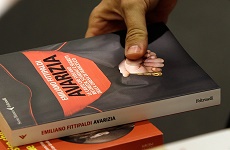
Italian journalist Emiliano Fittipaldi held his book titled ” Avarice” on Nov. 3, 2015. The Vatican’s new leaks scandal intensified Tuesday with two books detailing the mismanagement and internal resistance that is thwarting Pope Francis’ financial reform efforts. (AP Photo/Gregorio Borgia)
At first blush, the release of two keenly anticipated books promising bombshell revelations about Vatican financial scandals would seem to represent something of a “Casablanca” moment. That is, they seem likely to elicit pro forma professions of shock over things which, for the most part, everyone already knew
[Casablanca is a 1942 American romantic drama film directed by Michael Curtiz and based on Murray Burnett and Joan Alison's unproduced stage play Everybody Comes to Rick's. The film stars Humphrey Bogart, Ingrid Bergman, and Paul Henreid; it also features Claude Rains, Conrad Veidt, Sydney Greenstreet, Peter Lorre, and Dooley Wilson. Set during World War II, it focuses on an American expatriate who must choose between his love for a woman and helping her Czech Resistance leader husband escape the Vichy-controlled city of Casablanca to continue his fight against the Nazis.]
RELATED: Vatican scandal heats up with revelations of greed and intrigue
For instance, Gianluigi Nuzzi’s book “Via Crucis” (in English, “Merchants in the Temple”) describes how cardinals live in elegant and spacious quarters, often at zero cost, and that in general Vatican-owned apartments often bring in substantially below-market rents because residents have been cut sweetheart deals.
Meanwhile, Emiliano Fittipaldi’s book “Avarizia” details how commercial operations inside the Vatican walls - a gas station, pharmacy, tobacco shop, and supermarket - generate tens of millions of euro in income by selling products at discounted prices due to tax exemptions.
In theory, those services are reserved to Vatican personnel, but Fittipaldi uses reports from the Government of the Vatican City State to prove that the numbers tell a different story.
The tobacco shop, he writes, takes in 10 million euro a year. If all those cigarettes were being purchased only by Vatican employees, it would mean every one of them would have to “smoke like Turks” around the clock just to keep up. Obviously, people who aren’t supposed to be shopping in these places are finding ways in.
Little of this will come as news for old Rome hands.
When my wife and I lived in the city full-time during the late 1990s and 2000s, for instance, she had a friend who worked in a Vatican office who would occasionally lend her an employee card to get into the supermarket. My wife would report afterwards that she wasn’t sure any of her fellow shoppers actually worked in the Vatican, since they mostly seemed to be people like her.
That’s not to say the new books fall flat, because they put names and hard numbers on what had previously been anecdotal impressions of scandal and internal conflicts.
That said, it’s unlikely their deepest impact lies in their contents. Instead, it’s more about the changed Vatican landscape these books both exemplify and exacerbate.
In a phrase, they represent the death of the “Pontifical Secret.”
“Pontifical secrecy” is a well-defined concept in Church law applying to several categories of information, such as materials related to the naming of bishops and reports from papal diplomats. More broadly, however, it evokes the assumption that all communication with the pope is confidential, and it’s always up to him, and him alone, to decide whether to make any of it public.
That obviously didn’t happen here.
Both Nuzzi and Fittipaldi had remarkable access to confidential material supposedly reserved to the pontiff - an audio recording of a meeting with Francis and senior cardinals, reports from papal study commissions, income estimates for various Vatican operations, and so on. There may be few genuine bombshells, but the leaks themselves are real.
For sure, pontifical secrecy always has been honored as much in the breach as the observance.
Not so long ago, for example, the propositions adopted at the end of Synods of Bishops were regarded as private recommendations for the pontiff and were never released by the Vatican. Yet within 48 hours of every synod being over, those propositions would routinely show up in the Italian press, often first in the left-leaning Catholic news agency Adista.
To take another example, during the John Paul II years virtually every major Vatican document leaked out at various stages during the drafting process, and often by the time the text was officially published it seemed almost anti-climactic.
Though the total volume of leaks may not be greater now than before, two other things clearly have changed: the pope, and the media climate in which he’s constrained to operate.
Because of heightened public interest in Pope Francis, virtually anything that leaks out today is destined to become a sensation, dramatically increasing the market for those leaks. There’s also a much wider range of outlets trawling for those scoops, and whatever inhibitions once may have inclined them to respect an institution’s desire for confidentiality have long since frayed.
That landscape has been confirmed over the last month not only by the new books, but also by the leak of a letter to the pontiff signed by 13 cardinals at the beginning of the recently concluded Synod of Bishops on the family.
As a result, anyone who passes information to the pope today - no matter what it’s about, what form it takes, or how exalted their position supposedly is - needs to know there’s a good chance it will become public knowledge.
Some may see all this as a welcome dose of transparency, arguing that Catholic faithful around the world have a right to know what’s unfolding in the corridors of power. Others will fret that the collapse of confidentiality will induce people to be less than candid with the pope, and perhaps ensure that some things never reach him at all.
Still others will rue a breakdown of trust inside the Vatican, not to mention a lack of integrity among people who’ve pledged to maintain secrecy but acted otherwise. All those reactions, however, amount to after-the-fact exercises.
Back in 2013, in the wake of the first Vatican leaks affair fueled by Nuzzi the year before, Francis made the release of confidential documents a serious crime under the laws of the Vatican City State, styling it as an offense against state security. His corps of gendarmes has shown it’s in earnest about enforcement, recently arresting two insiders for allegedly leaking material to Nuzzi for the new book.
However understandable or defensible those moves may be, they probably won’t do much to change today’s bottom line: Everything about the Vatican may still be a mystery, but precious little will stay a secret.
Journalist refuses to answer Vatican prosecutor’s questions over leaks
Emiliano Fittipaldi author of Avarice criticised the Vatican’s ‘medieval rules’ and told investigators he would not reveal his sources
Italian journalist snubs Vatican magistrates seeking to question him
Gianluigi Nuzzi, author of Merchants in the Temple, received an official summons from the Vatican prosecutor
by CORKY SIEMASZKO/ NEW YORK DAILY NEWS - Updated: Tuesday, November 3, 2015, 1:20 PM
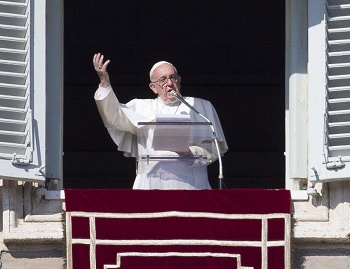
Pope Francis delivers his blessing during the Angelus noon prayer he celebrated from a window at the Vatican on Sunday. (ANDREW MEDICHINI/AP)
The Vatican operates a “saint making factory” on the premises presided over by mendacious monsignors and funded by payments of up to $483,000 from parishes pushing their candidates for canonization.
And most of the $400 million in St. Peter’s Pence offerings collected at parishes around the world winds up in an account that greases the wheels of the Holy See’s bureaucratic machine — not in the pockets of the poor.
Those of some of the shocking revelations about the corruption in the nerve-center of the Catholic Church that appear in two explosive new books that Vatican insiders were dreading.
Both reveal that Pope Francis has his work cut out from him as he tries to reform a secretive system where the Seventh Commandment against stealing is routinely flouted by high-living clerics eager to help themselves to the hundreds of millions that land in the collection plates.
“Merchants in the Temple,” by Italian journalist Gianluigi Nuzzi focuses on the commission Francis set in place to pry financial information out the Vatican fiefdoms that have been operating for centuries with barely any oversight.
It’s due out Thursday, but the Associated Press received an advance copy.
“Holy Father, ... There is a complete absence of transparency in the bookkeeping both of the Holy See and the Governorate,” five international auditors wrote Francis in June 2013, according to Nuzzi’s book. “Costs are out of control.”
Using minutes of meetings, memos, emails and recorded conversations, Nuzzi painted a damning portrait of an entrenched bureaucracy where waste and mismanagement are rife — and where everybody seems to have a secret.
Among other things, Nuzzi wrote, Francis’ sleuths discovered the value of the church’s vast real estate holdings were actually seven times higher than what was being reported on the Vatican balance sheet — and that rents on apartments given free to retiring cardinals and bureaucrats was 30% to 100% below the market rate.
The Vatican also turned a blind eye on the bank accounts of the “postulators,” whose job is to vet candidates for sainthood, Nuzzi recounted.
Nuzzi is no stranger to Vatican corruption. His expose in 2012 helped drive Pope Benedict into retirement and paved the way for Francis’ election with a mandate to clean house.
More fiscal shenanigans are unveiled in the book “Avarice,” by the La Repubblica newspaper’s Vatican reporter Emiliano Fittipaldi.
One of his juicier revelations was that $200,000 in funds raised to support a pediatric hospital in Rome was re-routed to pay for upgrades to the swanky pad of Monsignor Giuseppe Sciacca, the former No. 2 in the Vatican City State administration.
When Francis got wind of this, he demoted Sciacca and forced him to move out.
The Vatican has already panned both books.
“Publications of this nature do not help in any way to establish clarity and truth, but rather generate confusion and partial and tendentious conclusions,” the Vatican said.
The book excerpts appeared a day after the Vatican announced it had arrested a monsignor — and a brunette who served on Francis’ commission looking into the Holy See’s finances — on charges of leaking confidential records to reporters.
Within hours sexy shots of Francesca Chaouqui, who has agreed to cooperate with investigations, appeared on various web news sites.
3. Comments from Amazon Editor:
Praise for MERCHANTS IN THE TEMPLE “Nuzzi has significant sources within the Roman Curia, allowing him access to "exclusive, never-before-published documentation" that reveals a truly shocking, shameful story of waste and corruption within the vast network of Vatican finances. . . . The network of subterfuge is bewildering, and the barriers to transparency perhaps more than Frances can overcome, as Nuzzi delineates with valiant candor. While more historical context would be useful, this is a provocative work of dogged investigative research.”― Kirkus